Kitchen Grow Lights for Indoor Blooming Plants: Key Points
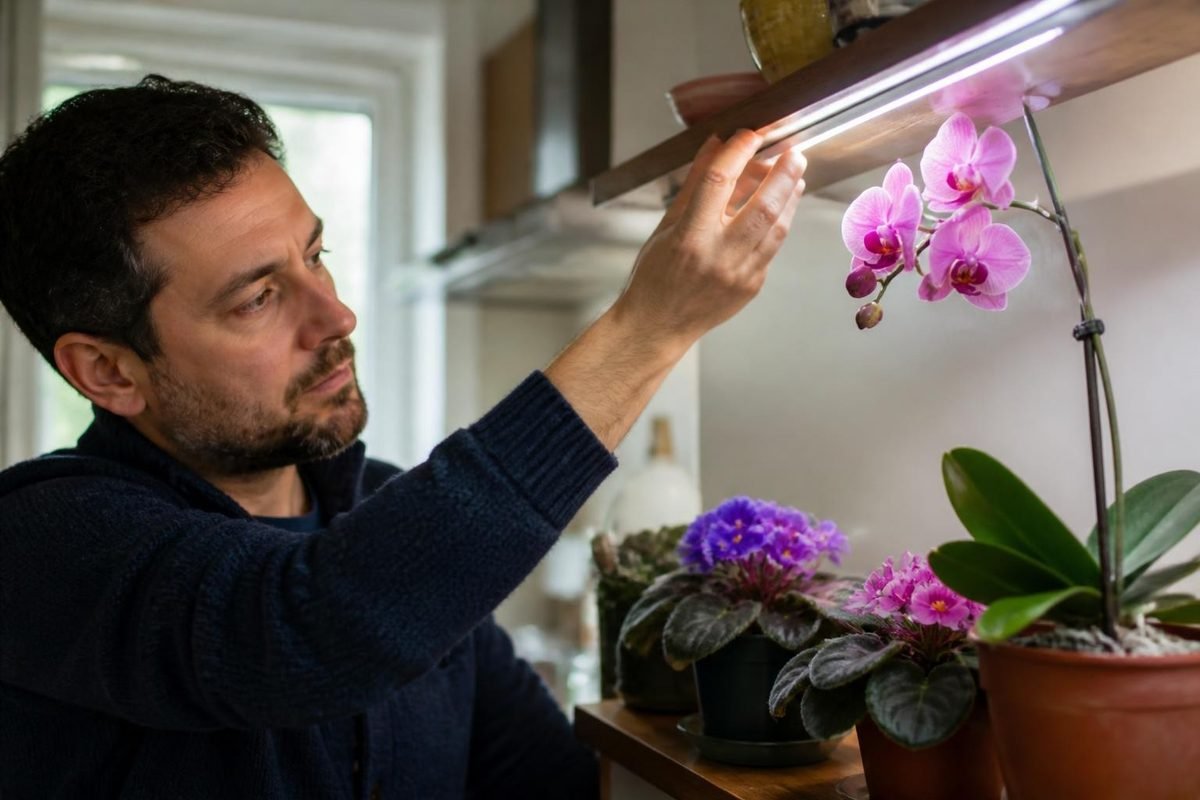
African violets, moth orchids, begonias, anthuriums and holiday cactus can flower under kitchen grow lights. Give each plant suitable light and watering, and keep it away from cooking heat and splashes.
Good flowering choices for indoors
These plants are suited to indoor growing and can bloom with an appropriate grow light. Their watering needs differ, so check each plant’s potting mix before watering instead of following one routine for all of them.
- African violet: This compact plant fits on a counter or shelf. Water when the surface of its mix feels dry, and try to keep water off its leaves.
- Moth orchid: Its flowers last a long time, making it a useful option where space is limited. Grow it in orchid bark, and water when the bark is nearly dry.
- Begonia: Many types flower indoors with bright, indirect light. Let the surface of the potting mix dry a little between waterings.
- Anthurium: Its colorful, waxy spathes may last for weeks. Provide bright light and a potting mix that lets water drain freely.
- Holiday cactus: This leafy cactus can bloom indoors with bright light and suitable seasonal conditions. Water when the top of the mix feels dry.
Position and schedule the grow light
Choose a grow light made for indoor plants. A full spectrum LED is a practical option: it supplies light plants can use and produces less heat than many older lamp types.
Use the manufacturer’s directions to set the distance between the light and the plant. Start with the light above the leaves, then watch how the plant responds. Pale or scorched patches may point to too much light or heat. Weak growth or a lack of flowers may mean the plant needs more light, although other conditions can also affect blooming.
A timer can help keep the light schedule consistent. Try about 12 to 14 hours of light each day, followed by a period of darkness. Some plants need a particular length of darkness to set buds, so check the requirements of the plant you choose.
Water and feed thoughtfully
Use pots with drainage holes so extra water can run out. A decorative outer pot is fine, but empty it if water collects inside. Roots left sitting in water can rot, so do not let drainage water remain around the pot.
During active growth, feed plants with a fertilizer suited to them and follow the label directions. Extra fertilizer will not compensate for insufficient light, and too much may damage the roots.
Find a sensible spot in the kitchen
Keep plants clear of the stove, oven vents and hot oil splashes. A steady shelf or an uncluttered part of the counter can work. Leave enough room to lift each pot for watering and cleaning, rather than wedging it into a spot you can barely reach.
Keep the grow light and its electrical cords away from splashes by the sink. Gently wipe dust from leaves so light can reach them, and remove flowers once they fade.
Questions gardeners often ask
Can an ordinary kitchen bulb stand in for a grow light?
A regular bulb may not provide enough useful light where the plant is growing. A light designed for growing plants is a more reliable choice.
Will a grow light bring an orchid back into bloom?
A grow light can supply needed light, but blooming again also depends on the orchid’s health and other conditions, including temperature.
Should flowering plants get light through the night?
No. Give plants a dark period each day. Check the needs of individual plants, since some require darkness to form buds.
On the same subject: post-harvest flower care